
Prometheus
Newsletter of the LFS

Originally published in 1979, 's first novel, Alongside Night, dealt with the economic malaise of America in the late 1970s. Although written over 30 years ago, the economic malaise the novel then covered remains current today, as America staggers out of the shadows of what the press has named the “Great Recession.”
recently turned his debut novel into a feature-length film staring Kevin Sorbo, Jake Busey, Tim Russ and Garrett Wang of Star Trek: Voyager fame, Gary Graham from the TV show Alien Nation, and cast of many dozens more. [See IMDB for more details at http://www.imdb.com]
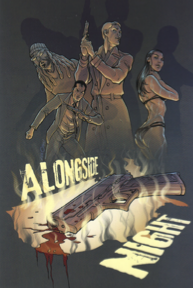
The new graphic novel is based on the screenplay, trimming content from the 180-page novel down to 110 pages of art and text. Updates have been made, since in 1979 there were no smart phones, minimal NSA surveillance compared to today's mass information gathering, and many other technical advances following the computer revolution since Apple's 1984 commercial.
In reading the graphic novel I studiously avoided re-reading the original. I wanted to see how the book appeared today, in the new format, rather than look at what changed. The story centers on Elliot Vreeland, a high school student and son of a noted free-market economist. Updated to “Las Vegas, five years from now,” the current mood in America, not much different from 30 years ago, is one for the most part against the free market, for a controlled society and economy. Elliot, a lone rebel thinker in his school, is pulled out of school and informed that his father is dead. This is a ruse, as his family has decided to go on the run since the government is rounding up dissidents and free-thinkers. Their escape plans goes awry, Elliot gets separated, and in his quest to find his family falls in with an underground Agorist movement.
The events in the novel are boiled down into non-stop action, and the pace makes the pages turn quickly. Elliot takes the reader through various adventures to a thrilling conclusion, all admirably suited for the big screen.
However, what works for the big screen falters for Alongside Night when translated into panels of art, especially given the size of the book, which is more a trade paperback format rather than typical graphic novel or comic book. The occasionally faded and sepia-toned graphics, mixed with occasional tiny lettering, makes the story visually a disaster. It gives the characters an almost anonymous look and feel. Faces are indistinct, backgrounds washed out, and the art lacks the detail one expects from a graphic novel or comic book. Had but the artwork contained more color and sharper tones, and the lettering easier to read, many drawbacks of the graphic novel would have been erased. There are great ideas in Alongside Night, ideas that were relevant many years ago and remain relevant today, perhaps even more so. The characters are real, fascinating, and compelling. As writes in the introduction: “Alongside Night was a warning when it first came out. Now it is contemporary reality.” But these ideas probably are best suited in the traditional novel format. It will be interesting to see how the movie version compares.
|
All trademarks and copyrights property of their owners. |
