
Prometheus
Newsletter of the LFS

“Fiction can be used to teach, explicate, and illustrate a wide range of business issues and concepts.”
—Edward Younkins interviewed by Allen Mendenhall for “The Literary Lawyer”
Exploring Capitalist Fiction is a discussion of eighteen novels, a play, and six films, depending on how you count them: the distinction becomes a little blurry, as some of the books were also made as films. The selection covers more than a hundred years of America’s somewhat crochety, fractious, and obsessive love-hate/hate-love-hate-rinse-repeat relationship with business in all its forms.
Exploring Capitalist Fiction gives detailed discussions of this selection from the eighty works Prof. Younkins has used since 1992 in his “Business Through Literature” course in the Wheeling Jesuit University’s MBA program.
It would have been catchy and clever to title this review “From Main Street to Wall Street,” for the book’s discussions do end with Oliver Stone’s 2010 Wall Street: Money Never Sleeps. Unfortunately for the conceit of critics, Exploring Capitalist Fiction does not begin with Sinclair Lewis’s Main Street (though Babbitt does come under the critical lens as Chapter 6). It begins instead with The Rise of Silas Lapham (1885) by William Dean Howells, a book and an author both much admired by Mark Twain.
I thought at first this was an odd choice for a start, and it might have been more appropriate to begin with the book that put Twain on the map and gave its name to an era, The Gilded Age: A Tale of Today (1873) or perhaps Anthony Trollope’s The Way We Live Now (1875), but Professor Younkins knows what he is about: while he makes no attempt to shade or evade the various unpleasant views of business and businessmen in his literary sample-box (treating them in his conclusion as features of sociological history), he is able to conclude the first of his many discussions by pointing out the businessman’s honesty and integrity that motivate Silas Lapham throughout and without exception, even as he is driven into bankruptcy by trying to appease his wife’s ill-informed sense of honor (one has to wonder if didn’t derive at least some insights into Henry and Lillian Reardon from reading Howells).
Younkins’s method throughout is a detailed plot description of each book or play or movie, pausing as the opportunity rises for thematic and sometimes historical commentary—but always articulating where the business theme is being presented, even when a reader might not automatically notice it.
It would be impossible to discuss the discussions in any satisfactory way within the scope of a review; a list of the book’s contents must suffice:
Professor Younkins also provides appendices listing five hundred additional works that might be used in such a context, and his conclusion, though largely taken up with a defense of teaching a non-literary subject through fiction, takes a brief ramble though some other works.
The treatment of Time Will Run Back is one of the book’s minor treasures. Economic journalist Henry Hazlitt is best remembered for his 1946 classic Economics in One Lesson, but Time Will Run Back is a utopian novel first published in 1951 and revised for republication in 1966 (Mr. Hazlitt lived until 1993, the year after Younkins inaugurated this course). Time Will Run Back is a kind of anti-Looking Backward, which centers on the re-discovery of market economics from within a thoroughgoing socialist command economy. This book, perhaps more than any of the others, neatly illustrates Younkins’s extended defense of teaching about business through fiction.
The summary-and-commentary format can give the chapters on the larger-scaled works a somewhat elliptical character, as Frank Norris’s 1901 The Octopus (Wheat! Wheat! Fields of wheat! I’m dying, and they’re talking about wheat!) or the centerpiece of the book, in the most literal sense, Atlas Shrugged (, 1957), complemented by a short and disconnected discussion of what is probably the primary source-influence of Atlas Shrugged, Calumet K, in the conclusion. Professor Younkins’ discussion concludes unequivocally: “Atlas Shrugged is arguably the greatest combination of philosophy, business, and literature written to date.”
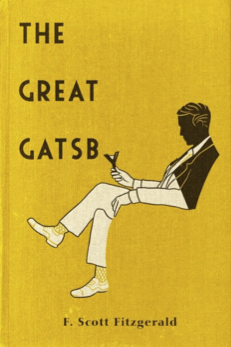
Perhaps part of the genuinely enormous impact Atlas Shrugged had into the 1960’s was that it appeared in the most deadly part of the “organization man” era, and it may well be that there are too many works of that cultural era represented here. Younkins’ discussions are always thorough and illuminating, but I could wish for some lighter material to balance out the fairly ponderous lineup—say, the charming and instructive The Solid Gold Cadillac (in the book appendix) or even How to Succeed in Business Without Really Trying (in the film appendix), whose broader satire can be just as illuminating as more sober and more earnest lamentations.
While Younkins’s book could surely be labeled a “good start” on understanding the various views Americans have taken of business over the decades, it omits, from the appendices as well as the text, all science fiction (with the possible exceptions of Looking Backward and Time Will Run Back—utopias—and Atlas Shrugged, whose status is still being debated).
This is a very odd and very conspicuous omission for this book, for science fiction has been exploring economics in futurity and alterity for most of its existence. And this exploration is continuing even now. has recently published more than 2,000 pages of a more-or-less science fiction-historical-hybrid, The Baroque Cycle, which turns on the transition out of Medieval-Renaissance business models and into modernity that was taking place in the Netherlands at the end of the 17th century, and ’s Merchant Princes series which occupies itself with replacing a feudal-era business model with a more contemporary business model amid the blood feuds of clan operations. This series represents present as well as future science fiction, as ’s publisher has announced a third trilogy in the series.
Nor should we omit explorations like the “reputation economy” that has been explored in ’s last several books (and ’s Accelerando) — or ’s trader-guild Polesotechnic League. Or the coalition of 19th century trusts who finance ’s Voyage to the Moon.
But the most astonishing omission of all is: no , not even in the appendices. Here is a highly influential writer who spent much of his life working with business and economic themes, and there is no mention at all. “The Man Who Sold the Moon” (1950) caused a large real world corporation to approach to conduct a reorganizational seminar, and Dr. Peter Diamandis (Space Ship One, X Prize) refers to that novella as his “business plan,” so its ongoing influence is reaching well into the 21st century. Nor is that the end of ’s economics-and-business related work: The Rolling Stones (1952) is built around a sketch of the economics of a “triangle trade” in the early days of solar system settlement. Since this was a book written for the Scribner’s juvenile line in the early 1950’s for which its intended audience was fifteen-year olds (give or take), it ought to have been a fairly important inclusion in the project. And just a few years after that, wrote Citizen of the Galaxy (1957) for those same juveniles (that is, the generation that runs the world today), which is built around the business infrastructure of the slave trade, on an interstellar scale. These books are still in print, still bought and read, still highly influential in shaping young minds and minds no longer so young…
Professor Younkins’s comments in interviews suggest he intends the book first as a class text (which may help explain the high price of the volume), and he does not believe his MBA candidates will relate to science fiction. Perhaps he is right—
—and that may ultimately be all the indictment of the current state of affairs in American business that is necessary or possible.
William H. Patterson, Jr. (1951 - 2014) has written articles on SF theory, Robert A. Heinlein, James Branch Cabell, among others. He is the author of the two-volume authorized Robert A. Heinlein biography; volume one appeared in 2010 and the second volume was published in 2014, both by Tor Books.
Patterson was active in Phoenix SF fandom in the 1970s, founded the Heinlein Journal in 1999, and helped organize the 2007 Heinlein Centennial in Kansas City in 2007.
This essay was written for Prometheus.
|
All trademarks and copyrights property of their owners. |
